Contributor

Filters

Filters Filters
Sort order Order by
Gaetano Pesce
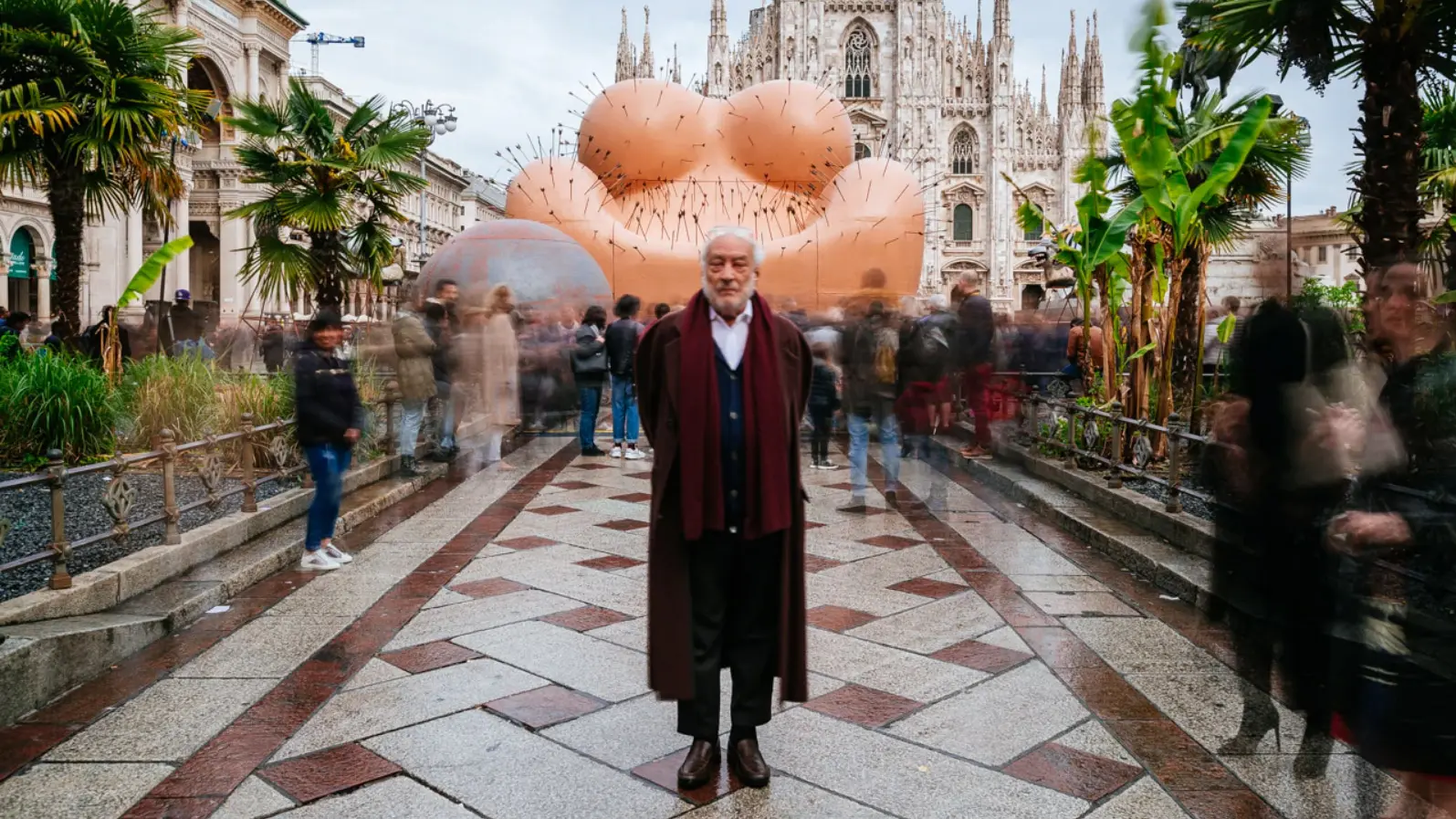
Gaetano Pesce is born in 1939 in La Spezia, Italy. He lives and works in New York. His work spans art, design and architecture. In a career spanning fifty years, guided by a constant drive towards innovation and experimentation, Gaetano Pesce, architect, artist and designer, has created public and private projects in the United States, Europe, Latin America and Asia, in the fields of architecture, town planning, interior design, and industrial and exhibition design. Herbert Muschamp, the authoritative architecture critic, presented Pesce’s multidisciplinary work as “the architectural equivalent of a brainstorm” and it is displayed in the permanent collections of the most important museums in the world, including the MoMA, the New York Metropolitan Museum, the Victoria and Albert Museum in London, the Centre Georges Pompidou in Paris, the Vitra Museum in Germany, the Montreal Museum of Art and various other museums in Japan, Portugal and Finland. Pesce has been awarded diverse prizes, including the prestigious Chrysler Award for Innovation and Design in 1993, Architektur und Wohnen Designer of the Year in 2006 and the Lawrence J. Israel award from the Fashion Institute of Technology in New York in 2009.His approach to design has gone down in history and his works have been celebrated in exhibitions of outstanding importance, such as Italy: The New Domestic Landscape held at the MoMA in 1972; the retrospective Gaetano Pesce: Le Temps des Questions, organised in 1996 in the Centre Georges Pompidou; Pushing he Limits, held in the Philadelphia Museum of Art in 2005; GaetanoPesce: Il rumore del tempo, at the Milan Triennale, also in 2005; the retrospective Il Tempo della Diversitá, at the MAXXI in Rome in 2014. Companies that have carried out his projects include Cassina, B&B Italia, Bernini, Knoll International, Venini, Swarovski, Meritalia and Zerodisegno.Born in La Spezia in 1939, Pesce studied architecture at Venice University and when he was young, wrote a manifesto defending the right to incoherence in art, the need for change, to be free, and not to repeat oneself. During the course of the following 28 years, Pesce taught at Institut d’Architecture et d’Etudes Urbaines in Strasburg, Carnegie Mellon in Pittsburgh, the Accademia Domus in Milan, the Hong Kong Polytechnic, the School of Architecture in São Paulo and the Cooper Union in New York, where he moved in 1980 after having lived in Venice, London, Helsinki and Paris. In Pesce’s production, the borders between art, design and industry become irrelevant because art is also a product, it is the creative reply to the needs of the times we are living in. His continuous research in the field of advanced materials, languages and technology has been translated into iconic productions such as the series Up (1969), made of seven voluptuous-shaped chairs, including Up #5, La Mamma, the first industrial design product bearing a political message, that of denouncing the condition of women in the world. In 2002 the design collection Nobody’s Perfect, made with polyurethane elastic resin, marked the birth of Pesce’s idea of “diversified series”: the creative choices of craftsmen that produce the pieces, giving them an unrepeatable colour and texture. Pesce refuses repetition and abstraction but he loves colour, new materials, political content, “misdeeds”, provocations, the feminine, the figurative, the human and all our five senses. His restructuring of the seat of the advertising agency TWBA/Chiat/Day in Manhattan (1995) was described by the New York Times as “an extraordinary work of art that clearly stands out from the lucid rigour of the aesthetics we have ended up associating with modernity.”Built between 1989-1993 in Osaka, Japan, his Organic Building, the façade of which is a vertical garden, has been declared a public monument by the city. In 2011 Pesce presented the installation L’Italia in Croce, displayed at the Triennale Museo del Design in Milan and at the Venice Biennale. In 2012, at the David Gill Gallery in London he exhibited Six Tables on Water, a collection of tables-landscapes representing the surface, density and changing colours of water in its diverse forms: oceans, lagoons, ponds, and puddles, from a bird-eye’s view. In 2016 in Florence, it was with Maestà Tradita (exhibition at Museo Novecento and an installation in Piazza S. Maria Novella) that once again Pesce denounced the difficult conditions of women in contemporary society and the underlying hypocrisy that often undermines change. The huge figure of a woman covered in what appear to be sheds of meat, resting on a throne that evokes the shapes of UP5, symbolizing the vain, empty idea of splendor. In 2017 at the Museo del Vetro in Murano, Gaetano Pesce presented the result of his glass experiments made from 1988 to 1992 at C.I.R.V.A in Marseille, which led to the invention of five new revolutionary techniques of processing this material. In the same year, at the historical complex of Palazzo Ducale in Mantua, the exhibition “Architecture and Figuration” celebrates the artist’s visionary creativity with the display of some of his most relevant architectural projects. In 2018 the Palazzo della Ragione in Padua, Italy, held a large retrospective of his work. In 2019 for Milan Design Week Gaetano Pesce installed in the Piazza del Duomo a 26 foot tall version of his infamous UP 5_6 chair, which celebrated its 50th year anniversary that year. In 2021, Gaetano Pesce had his first solo tour exhibition in Asia. Now in 2022, Gaetano Pesce created the show space for Matthieu Blazy’s sophomore outing at Bottega Veneta in Milan, comprising a poured resin floor and 400 unique chairs.   Photo credits Gabriele Zanon
Johanna Agerman Ross
Johanna Agerman Ross recently joined the Design Museum in London as the Conran Foundation Chief Curator and looks after the museum's exhibition programme. She was previously the curator for 20th-century and contemporary furniture and product design at the V&A. In this role she curated the new permanent gallery Design 1900-Now, and the internationally touring exhibition Plastics: Remaking Our World in collaboration with colleagues at Vitra Design Museum, V&A Dundee and maat Lisbon. She has also been leading the new initiative Make Good: Rethinking Material Futures - an annual symposium and display dedicated to looking at natural, renewable materials in design and architecture. In 2011 Johanna founded the design journal Disegno in 2011 and she continues to oversee the publication as its Director. Johanna is originally from Sweden but came to the UK to study at London College of Fashion and Royal College of Art where she did an MA inHistory of Design. She has previously worked as a deputy editor and acting editor at the design and architecture magazine Icon. 
Rodolfo Agrella
Rodolfo Agrella is Designer and Architect based in New York, born and raised in Caracas, he is the heart of a team in charge of manifesting narratives into award-winning physical and digital products, interiors, graphics, exhibitions, and immersive spaces. His firm RADS — Rodolfo Agrella Design Studio, founded more than a decade ago in NYC, has crafted joyful collaborations with international brands such as Absolut, Koziol, TaiPing Carpets, Silverspot Cinemas, WeWork, Bernhardt Design, Heller, 3M, MoMA, Steinway & Sons, Wanted Design and ICFF, developing products, graphics, exhibitions and creative directions. Agrella’s work and talent has been exhibited at the most important global venues and trade shows, such as Salone Satellite di Milano—where his career started— earning him international recognition, including the prestigious German Design Award—Special Mention, among many others.
Akgün Akdil
Akgün Akdil is design editor, art director and interior stylist. She is also a fashion editor and fashion stylist. After she obtained her BA in Landscape Architecture, she started her publishing career in Country Homes magazine as a style editor. Since then she has worked for Elle Décor, House Beautiful, Home Art, Marie Claire Maison, InStyle Home, Madame Figaro, GQ, InStyle, Harper's Bazaar, Cosmopolitan magazines as a freelance journalist in Turkey. She does photo shoots, writes articles, and does interviews in these magazines.  Akgün is regularly invited as a journalist to major fairs, events such as Salone del Mobile, Milan Design Week in Milan; Paris Fashion Week, Maison&Objet, Paris Design Week, La Biennale Paris, Paris Déco Off, Who's Next, Paris Photo, Art Paris, IdéoBain in Paris; La Biennale Internationale Design in Saint-Étienne; Ambiente in Frankfurt. She pens articles on all these events and the new trends, interviews with designers.   Aside from creating/managing decor, fashion and gourmet related projects Akgün partakes as a stylist and art director in TV commercials, advertising shootings and documentaries. She also does visual merchandising for stores and fair booths. She is an image and style consultant, personal stylist for women and men, including some celebrities.
Chiara Alessi
Chiara Alessi (1981) is engaged with material culture and design, on which she writes, teaches and, when she can, curates exhibitions. She has been publishing the following essays: Dopo gli anni Zero. Il Nuovo Design Italiano (Laterza, 2014), Design Senza Designer (Laterza, 2016), Le Caffettiere dei Miei Bisnonni (Utet, 2018) and Tante Care Cose. Gli Oggetti che ci Hanno Cambiato la Vita (Longanesi, 2021). Her Twitter feed #designinpigiama, launched in 2020 right in the middle of lockdown, notched up millions of visits. Her film for the presentation of the podcast La Mia Olivetti won the La Stampa Archivissima award. Her five-episode podcast Certe Cose for Il Post came out in 2022, devoted to the stories of objects found in the lists of Italian events over the last fifty years.
Daniela Amandolese
I'm a product designer and researcher, dedicated to the complex, multidisciplinary, and constantly evolving role of the designer. After graduating from the Politecnico di Milano and gaining experience at 3M Italia and Carlo Forcolini's studio, I focused my interest on how emerging and sustainable materials (bio-based and growing) and technologies can become important elements of the design practice, triggering innovative processes and reshaping the way we think about the future. I've written publications, given lectures, workshops, and conducted research and consultancy on this topic. I collaborated for a couple of years with the Politecnico di Milano as a researcher, and after worked with companies like Luxottica, Somfy Group, and Vismaravetro. For the last eight years, I was part of Materially’s EU Project team as an Innovation Researcher, and I was Adjunct Professor and collaborator at the IDEActivity center at Politecnico di Milano. Currently, I’m a Lecturer at the German University in Cairo, focusing on sustainable design and local bio-based materials within the Design Department. InstagramLinkedIn
Alberto Apostoli
Alberto Apostoli was born in Verona in 1968, graduating in Architecture in Venice in 1993 and at the same time studying and working in various European countries. In 1997 he founded Studio Apostoli, characterized by a multifaceted professional vocation, a consequence of his personal career. In 2006 he held his first personal exhibition in the seat of the European Parliament in Brussels entitled “Architecture contaminated between Communication and Design”. In the same year he opened a studio in Guangzhou (China) and in 2007 a representative office in Casablanca. He is considered among the most important professionals in the Wellness sector at an international level and is on the board of some associations and private companies that carry out activities in the specific sector. Alberto Apostoli carries out a multidisciplinary activity and develops design services in the fields of Architecture, Interior Design and Product Design in Italy and abroad for private, public and corporate clients. Apostoli's design approach is affirmed as a true “manifesto” of the Architecture of Wellness: Wellness governs the development of each project created by the architect, while at the same time carrying on an Italian uniqueness made up of customization, innovation, luxury and sense of beauty. Among the most important projects we should mention the Lefay Resort & SPA Dolomiti in Pinzolo (2019), the SPA in Portopiccolo in Sistiana (2017), Neró SPA at the Prehistoric Baths of Montegrotto Terme (2019), Dhara SPA in Brenzone (2010) , Casa Cipriani SPA in Milan (2021), Sasha Jacuzzi (2010), Just Play by Nike Stores (2017, ongoing), Allianz Wellness offices in Trani (2015), L'Eliseo Shop in Caldiero Terme (2011 ), the FAAS Medical SPA in Lijiang China (2016), the Palazzo del Lavoro in L'Aquila (2012), the Agrirelais Casale del Principe in Monreale (2014), the Residence Santa Caterina in Verona (2013), Atrium Spa & Beauté in Macon France (2016), the SPA of the Four Seasons in Moscow (2014), the Vision Hotel in Peschiera del Garda (2019). Apostoli's projects have been published in over 40 countries and have won a total of over 50 awards, among which the prestigious "100 Italian Excellence Award - Interior Design Section" and "Ken Saro Wiwa Award - Acqui Ambiente" should be mentioned even in 2021.
Alejandro Aravena
He took his degree in Architecture from the Catholic University of Chile in 1992, becoming self-employed in 1994. Director of the Venice Architecture Biennale (2016). He spoke at TEDGlobal (2014) and was a member of the Pritzker Architecture Prize Jury (2009-2015). He became an International Fellow of the Royal Institute of British Architects – RIBA (2010). He taught at the Harvard Graduate School of Design (2000-2005) and was a Visiting Professor at the IUAV University in Venice (2005). He now chairs the Pritzker Jury. He has netted various awards, including the Erich Schelling Architecture Medal (2006), the Silver Lion at the Venice Architecture Biennale (2008), the Pritzker Prize (2016), the Charles Jencks Award (2018), Denmark’s Index Award (2011) and the Gothenburg Sustainability Award, assigned to an architect for the very first time, in 2017.