Contributor

Filters

Filters Filters
Sort order Order by
Maurizio Nanucci
(Florence 1939) Nannucci lives and works in Florence and in South Baden, Germany) He belongs to the most inventively experimental artists of the last decades. Since the mid sixties he devotes himself to exploring the multifaceted interrelations between language, writing and visual images, drawing on concepts and linguistic ideas and employing a wide variety of media, including photography, video, artist‘s books, editions, sound installations. On the search of artistic answers to a world in continuous change, he has developed an interdisciplinary approach of art practices which opened up a network of cooperations in the fields of art, architecture, poetry In addition to language he is keenly interested in colour in all its manifestations.  As early as 1967 he began to create first neon “ adding a further dimension of meaning and sensual appeal to his work With colourful lighted installations the artist place word images in a fluid circuit that flows between colour, sign and meaning. The artist uses coloured glass tubes and neon light which have the effect of sharpening visual perception. The variety of luminous configurations motivates the viewer to see and to interpretate language as well as the spatial context in a new way. Documenting his linguistic research and colour experiences Nannucci collects continuously his own writing in the work in progress “ 1967 2011 From 1974 to 1985 he promoted the activities of the Zona no profit art space in Firenze and in 1998 is a co founder of Base, progetti per l’arte Nannucci has created Zona Archives, Recorthings and Exempla editions, curating several exhibitions in museums and public institutions In the early Nineties Nannucci started to collaborate with architects as Fritz Auer, Mario Botta Stephan Braunfels, Massimiliano Fuksas, Nicholas Grimshaw, Renzo Piano, and realized several projects for public buildings. He has participated several times in the Venice Biennale, at the Documenta Kassel, and in the Biennals of Sao Paulo, Sydney, Istanbul and Valencia his works have been shown in over four hundred museums and gallery exhibitions. His work is part of collections worldwide, including Fondazione Guggenheim, Venice Staedtische Galerie im Lenbachhaus Munich Berliner Museen Berlin Centre George Pompidou, Paris MoMA, New York Kunstsammlung des Deutschen Bundestages Berlin Museum of Fine Arts, Boston Cnap Paris Maxxi Roma Palazzo delle Scintille CityLife, Milano Palazzo della Pilotta Parma.
Luca Nichetto
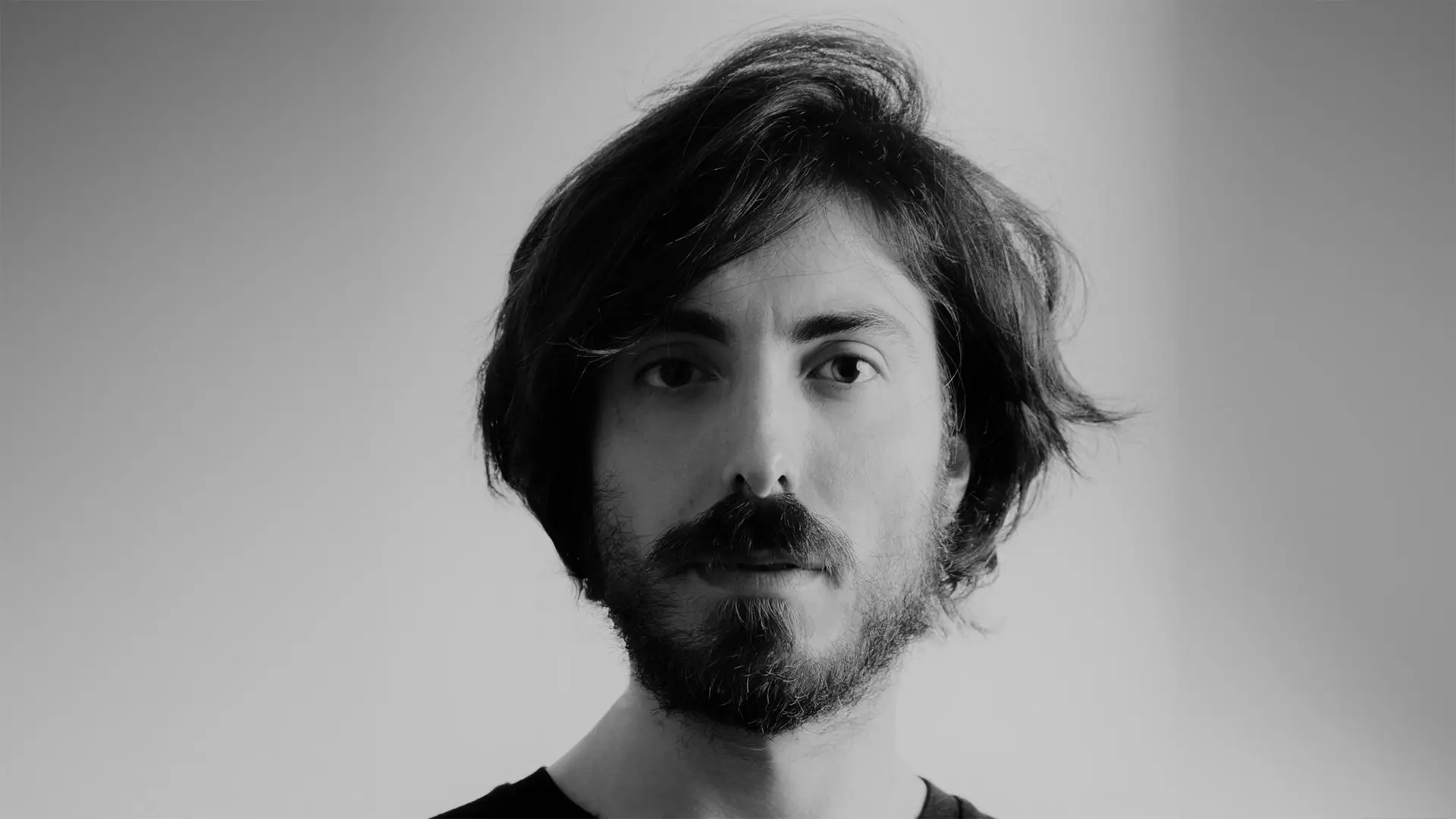
Luca Nichetto was born in Venice in 1976, where his artistic talents were inspired by the famous Murano glassmaking industry, which employed members of his family. His career effectively started in his schooldays, where holidays were spent selling his designs to local factories, before he went on to study at the city’s Istituto Statale d’Arte and then take a degree in industrial design at the local Università Iuav di Venezia (IUAV), graduating in 1998. The following year, he joined the Murano-based glassmaker Salviati, later becoming a product designer and consultant for lighting company Foscarini. He took the leap to setting up his own practice in the city, Nichetto Studio, in 2006. Five years later came another major turn in his career, when he moved to Stockholm, Sweden, to start his family and opened a second studio there, combining his Italian flair with the Swedish spirit of modernity and sustainability.  Over the years, Luca has served as art director for many international design brands and gained a reputation as a multidisciplinary designer. He has lectured and led workshops at several universities, including serving as a professor of design at the IUAV, and has sat on juries for various international design competitions. His work is often featured in prestigious exhibitions worldwide and has been the subject of retrospectives in cities including London, New York and Beijing. His highly researched, innovative projects have earned him an impressive array of international awards for designs that range from products, accessories and furniture to architecture, exhibition design and branding. NICHETTO STUDIOLuca Nichetto founded his eponymous multidisciplinary design practice in Venice, Italy in 2006, specialising in industrial design, product design and design consultancy. From the very beginning, Nichetto Studio worked with a number of different brands and organisations; these collaborations were to become a cornerstone of his work and his influence had soon expanded far beyond Venice and Italy’s borders. Fellow Treviso-born designer Francesco Dompieri joined the studio as a partner in 2007, and four years later, Nichetto opened a second studio in Stockholm, Sweden, catering to an ever growing number of requests for collaboration from international companies. Soon, the studio’s work was broadening out from its initial focus on designed objects. Today, the studio works with a variety of brands and clients from around the world and its expertise is sought out across all design disciplines. A deep passion for, and knowledge of, industrial and craft manufacturing processes runs through every aspect of the studio’s work. Its projects abound in carefully selected cultural references and a keen attention to detail. The practice’s unique position within both Scandinavian and Italian design culture has given Nichetto Studio worldwide acclaim that extends far beyond the confines of the design industry.
Andrea Obertello
Graduated from Glion Institute of Higher Education, Andrea Obertello began her professional career in hospitality a decade ago with Four Seasons Hotels & Resorts. Her path in the company has taken her across many different countries and continents – from front-office positions in Uruguay and Miami, to leading the Rooms department of the iconic Four Seasons Hotel Firenze. She then joined Four Seasons Hotel Marrakech as Resort Manager before moving to Four Seasons Doha as Hotel Manager in 2017. Native from Argentina, it is her Florentine experience that made her fall in love with the Italian hospitality and culture. She came back to Italy with a wealth of international experiences and leadership skills that will help her drive the hotel’s performance in its continued success which started in 1993.   
Hans Ulrich Obrist
Hans Ulrich Obrist (b. 1968, Zurich, Switzerland) is Artistic Director of the Serpentine in London, and Senior Advisor at LUMA Arles. Since his first show World Soup (The Kitchen Show) in 1991 he has curated more than 350 exhibitions. Most notable amongst these are the Do It series (1993–), Take Me (I'm Yours) in London (1995), Paris (2015) New York (2016), and Milan (2017); and the Swiss Pavilion at the 14th International Architecture Biennale in Venice (2014). Obrist has also co-curated the Cities on The Move series (1996–2000), Laboratorium (1999); the operatic group exhibition Il Tempo del Postino in Manchester (2007) and Basel (2009), and The 11, 12, 13, 14, 15 Rooms series (2011–2015). Obrist's recent exhibitions include Enzo Mari at Triennale Milano (2020) and WORLDBUILDING at Centre Pompidou Metz (2023) and Julia Stoschek Collection Dusseldorf (2022). The Handwriting Project, which protests the disappearance of handwriting in the digital age, has been taking place on Instagram since 2013 (@hansulrichobrist). 
Davide Oldani
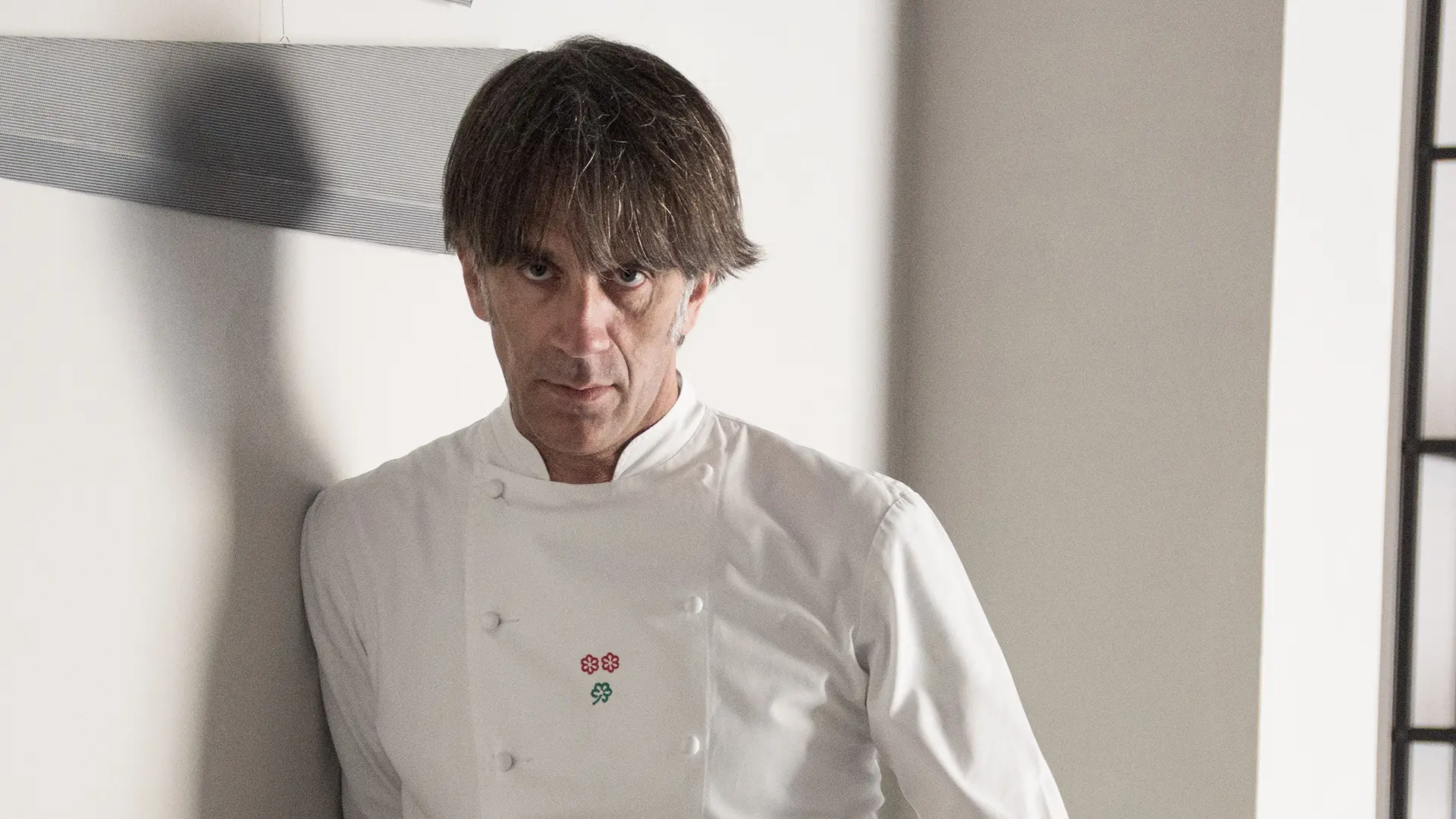
Davide Oldani, the creator of cucina POP – high quality and accessibility – opened his restaurant il D'O, in 2003, in his hometown of Cornaredo in the province of Milan. One year after opening, the world's most authoritative food guides counted him amongst the greatest chefs of contemporary Italian cuisine. Prior to opening D'O, he worked with Gualtiero Marchesi, Albert Roux, Alain Ducasse and Pierre Hermé. In December 2008, Oldani was awarded the Ambrogino d'Oro by the City of Milan. In November 2013 he was invited to Harvard Business School to share his experience as an entrepreneur following a case history about his restaurant which was published in the Harvard Business School Review: the economics professors at the university defined his approach and his organization applicable to many different sectors, not only to restaurants.  March 2015 held a lesson at the University of Business in Paris HEC. May 2014 saw the opening of Davide Oldani Cafè – in the new luxury Piazza at Malpensa Airport, Milan. From September to November 2013 he conducted the first season of the program, The Chef, on channel La5. From September to December 2014 he conducted the second season of the program, The Chef, on channel La5. He has been named Ambassador Expo 2015 and in the same year he took part as speaker at the World Business Forum in Milan. His publications include: Cuoco andata e ritorno (2008), La mia cucina pop. L'arte di caramellare i sogni (2009), POP, La nuova grande cucina italiana (2010), Il giusto e il gusto (2012), Storie di sport e cucina (2013), CheFacile (2013), POP FOO’D – La cucina NON regionale italiana (2015), Le D’Onne lo sanno, Mangia come parli Good morning Italia (July 2020), Mangia come parli POP Rhapsody (November 2020). For the past 14 years, Oldani has collaborated with the authoritative culinary magazine, La cucina italiana, and writes a weekly column about sport and cucina POP for the magazine Sport Week, and also wrote on the blog Chiacchierando con gusto, the weekly journal IoDonna – Corriere della Sera. In 2016 he opened his new D’O at Cornaredo*, an evolution of the previous one, where he will be able to create “greater” cuisine, able to be measured against the other cuisines of our country and not only. In 2017 he started a new radio adventure in paired with Pier Luigi Pardo on Radio24 station with the program “Mangia Come Parli”. In November 2020 Chef Oldani awarded by Michelin Guide the second Star and the Green Star for sustainability, and in May 2021 by L’Espresso Guide. His activity as a designer is born from keen observation of his guests and their habits. Tables, chairs, dishes, tableware and glassware are inspired by the POP cuisine philosophy: simple, functional, elegant. The brands created for his designs are: “IDish” – "assiette D’O” – “H2D’O" – “XFETTA”. The formats are: “FOO’D” – “Davide Oldani Cafè” – “CucinaPOP”   Cucina POP by Davide Oldani "My cucina POP was born from the desire to combine simplicity with well-made, delicious with accessible and innovation with tradition. I am convinced that great Italian cuisine is great – not only for its variety and flavours – but because it is open to infinite reinterpretation: I do it with simplicity, with an emphasis on each individual ingredient. Seasonal ingredients and exceptional quality are the two cornerstones of my cuisine. To these two principles I have added a third, that guides me in the preparation of every dish: the search for harmony and the equilibrium of contrasts, that for me is not only the promise of sweetness in something savory or an idea of saltiness in something sweet, but it is also the harmonious coexistence of everything that stimulates the palate in every dish: soft, crunchy, hot, cold, sweet, bitter..." All these elements, for Davide Oldani, come together to create a cuisine that is light but full of flavour, healthy but varied, simple yet surprising. The idea of cucina POP is not limited to cuisine: it can be found in his passion and constant research, the incredible teamwork and in the attention to his guests. Simple yet elegant, everything should be not only beautiful but also functional, as are all the objects Oldani has created for his guests.
Giulia Ossola
Professional journalist, milanese. I talk a lot, in general, and write a lot, in particular about architecture, interior and design. With a degree in Philosophy, I started working in the editorial staff at Il Giornale while attending university, first in the News section and then in the Sports section. I have always loved flipping through interior and design magazines and since 2009, for a few years, I was in the editorial staff of Living-Corriere della Sera. Later I collaborated with Cabana, ViviMilano, Icon Design, The Good Life, and Elle Decor. I have managed various digital communication projects, written editorial plans for the social media of architects and design companies, content for websites, catalogs, newsletters, interviews: all things I continue to do in my (little) spare time. Writing relaxes me and curiosity leads me to meet new people and stories all the time. I currently work as a copywriter in a communications agency, following architects and design companies, always trying to bring out their thinking and the personality behind each project. 
Satyendra Pakhalé
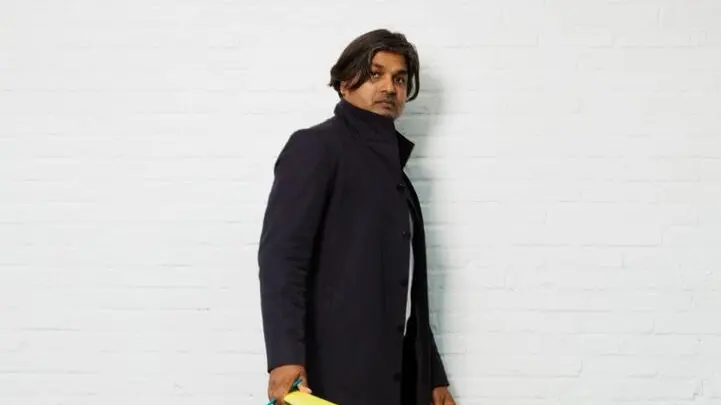
Multi-faceted designer Satyendra Pakhalé, trained in India and in Switzerland, has been working globally from his studio in Amsterdam since 1998. He has cultivated a design practice that focuses on the ‘culture of creation’, with the sensorial qualities that have so often been lost due to the excesses of industrialization and consumerism. His design work is an act of unity going beyond any binary such as high- and low-tech, industrial production and traditional crafts, functionality and poetic significance. Pakhalé explores diverse cultural roots and creates contemporary objects and architectural spaces with the awareness that being a designer means being socially and culturally responsible. He was the founding dean of the Master of Design for Humanity and Sustainable Living at the Design Academy Eindhoven from 2006-2010. His works are in permanent collections at prestigious museums throughout the world, among which the Victoria and Albert Museum London, Stedelijk Museum Amsterdam, Montreal Museum of Fine Arts and Centre Pompidou, Paris.
Mattia Parodi
Mattia Parodi (Genova — 16/10/1989) Si è laureato in Disegno Industriale presso la facoltà di Architettura di Genova nel 2014. Nello stesso anno si trasferisce a Urbino dove frequenta l’Istituto Superiore per le Industrie Artistiche (ISIA) partecipando a laboratori con autori quali Jason Fulford, Stefano Graziani, Niccolò De Giorgis e Davide Tranchina. Nel 2017 consegue il diploma di II livello in Fotografia dei Beni Culturali con una tesi fotografica sviluppata insieme a Piergiorgio Sorgetti e supervisionata da Alessandro Carrer e Federico Clavarino. Ha partecipato ad altri laboratori didattici come “Dolomites” con Domingo Milella, curato da Gianpaolo Arena (Landscape Stories) e “La Fotografia pensa” a cura di Guido Guidi, Cesare Fabbri e Silvia Loddo. Nel 2016 il suo lavoro è stato selezionato per il progetto "Abitare il Deserto", a cura di Cesare Zaffagnini e pubblicato da Osservatorio Fotografico. Sempre nello stesso anno ha preso parte al progetto collettivo "Lacuna/ae. Identità e Architettura Moderna a Venezia" a cura di Eleonora Milner. Nel 2018 partecipa alla residenza d'artista "Cuore di Pietra" curata da Federico Clavarino e Skinnerboox.  Il suo lavoro è stato esposto in diverse mostre collettive come Step, Kneel, Rub, Touch, Look, Grasp, Repeat presso la galleria Page Blanche di Parigi, al Palm Studio Photo Prize  di Londra e al Festival 10x10 di Gonzaga. Nel 2021 pubblica il suo primo libro fotografico "The Missing Eye" insieme a Piergiorgio Sorgetti, edito da Witty Books. Attualmente vive e lavora a Milano.
Frida Pashako
Frida Pashako (Tirana, 1983) lives and works in Tirana. Mrs. Pashako concluded her PhD studies at the Polytechnic University of Bari. Currently, she holds the position of General Director of Urban Planning at the Municipality of Tirana. Mrs. Pashako is also a part-time lecturer at Polytechnic University of Tirana, as well as a visiting professor at the Polytechnic University of Bari, Italy. Besides all the academic experience, she holds the President position of INTBAU Albania. The range of Mrs. Pashako’s interests varies in different aspects, including architectural heritage, traditional dwellings, modern architecture in Albania during the years 1920's-1940’s and Ottoman cities in the Balkans Region. Mrs. Pashako has been part of many competitions, such as the Swiss Pavilion in 2014, and also finalist at the competition call for Exhibition Proposals for the Albanian Pavilion at the 16th Venice Biennale. Frida Pashako is author and co-author of a series of publications and also has a broad curatorial experience in organizing exhibitions.
John Pawson
John Pawson CBE has spent over thirty years making rigorously simple architecture that speaks of the fundamentals but is also modest in character. His body of work spans a broad range of scales and typologies, from private houses, sacred commissions, galleries, museums, hotels, ballet sets, yacht interiors and a bridge across a lake.  As Alvar Aalto’s bronze door handle has been characterised as the ‘handshake of a building’, so a sense of engaging with the essence of a philosophy of space through everything the eye sees, or the hand touches is a defining aspect of Pawson’s work. His method is to approach buildings and design commissions in precisely the same manner, on the basis that ‘it’s all architecture’.  Whether at the scale of a monastery, a house, a saucepan or a ballet, everything is traceable back to a consistent set of preoccupations with mass, volume, surface, proportion, junction, geometry, repetition, light and ritual. In this way, even something as modest as a fork can become a vehicle for much broader ideas about how we live and what we value. 
Giulia Pellegrino
Giulia’s first job in Milan was for gallery owner Antonia Jannone, of Disegni di Architettura fame. For fifteen years she was the coordinator of the Foundation of the Order of Architects. Later she was appointed as the manager of the Cino Zucchi Architecture studio. She has been involved with the “Fuorisalone” in several capacities for the past twenty years, and from 2014 to 2016 collaborated with the Contemporary Art and Design Festival (C.Ar.D.) team, setting up site-specific exhibits over the hillsides around Piacenza. For the last eight years she has worked with Ron Gilad, and for just over two with Emilio Ambasz. Giulia is a founding partner of Archivia, a producer of stationery and writing instruments for designers and architects. In 2021 she was the curator of “Vietato L’Ingresso”, a project that involved designing something new and permanent for Milan’s Arcimboldi Theater: the dressing rooms. The success of the event led her to being appointed curator of design and architecture events at the prestigious theater and opera house designed by Vittorio Gregotti. Instagram  LinkedIn 
Matias Perdomo
Matias, who is Uruguayan, has worked in kitchens since he was 14, and four years later he started honing his skills in the kitchens of an Italian restaurant in Montevideo, from which he took off directly for Milan to give his friend and fellow Uruguayan chef Juan Lema, who was already working at the Pont de Ferr, a hand. His boundless creativity meant that it wasn’t long before Matias took up the reins in the kitchen, instituting a veritable revolution in terms of recipes, preparations and presentations. Armed with an insatiable curiosity about the new techniques arriving from Spain (crucially spending fundamental periods with the Roca brothers in Girona), Matias laid down a challenge to Milan, serving up some of the most creative dishes in the city. His adventure at the Pont De Ferr ended in 2014 when he and his friends and partners Simon Press and Thomas Piras set up the Contraste restaurant, where the cuisine is cutting edge, never predictable, constantly surprising its diners. This was followed by Exit, urban gastronomy, and the more recent Empanadas del Flaco, Roc and Exit Pastificio Urbano, a successful format very well-regarded by the general public. Contraste, Milan Website: www.contrastemilano.it, Instagram: @mpchef @contrastemilano_